
Get airbnb market data right
Start Airbnb Market Data with the constraint that matters most in real life: space, timing, budget, skill level, maintenance, or availability. That first constraint should shape the rest of the plan instead of appearing as an afterthought. Keep the first pass simple enough to verify. Compare the main options against the same criteria, remove choices that only work in ideal conditions, and save optional upgrades for later.
The simplest way to use this section is to write down the real constraint first, compare each option against it, and choose the path that still works outside ideal conditions.
Walk through the steps
Using Airbnb market data requires a disciplined workflow. You need to move from raw numbers to actionable pricing and listing adjustments. This sequence covers the core checks every host should run before setting rates or updating listings.
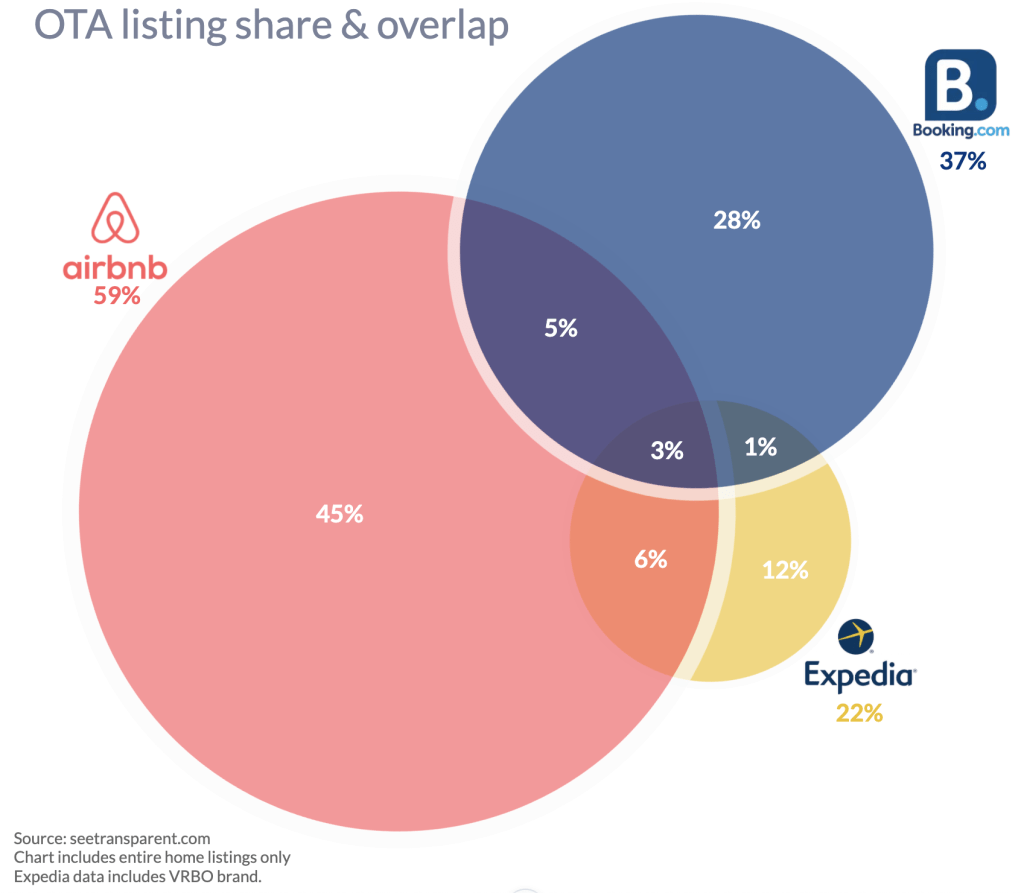
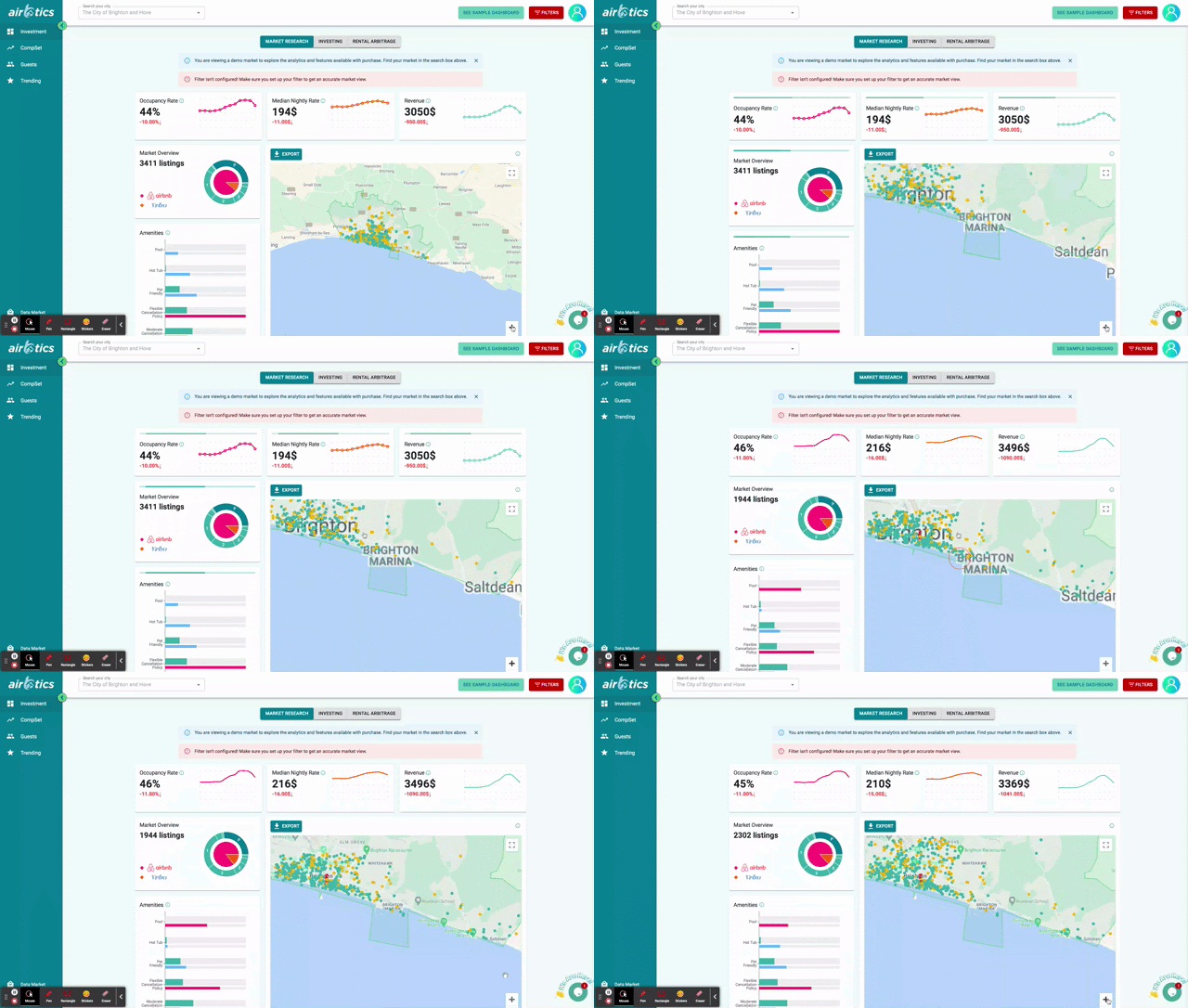
Start with a reliable platform like AirDNA or AirROI. These tools track millions of listings and provide baseline occupancy rates and average daily rates (ADR) for your specific zip code or neighborhood. Look for the "Revenue Potential" metric to see what a typical property in your area earns. This number is your starting point, not your target. It tells you what the market supports, not what you will achieve.
Identify your top five direct competitors. These are properties with similar bedroom counts, price points, and guest ratings. Compare their amenities, photos, and review frequency. Note what they offer that you don’t, such as a dedicated workspace, high-speed internet, or premium bedding. This gap analysis reveals where you can add value without significant investment.
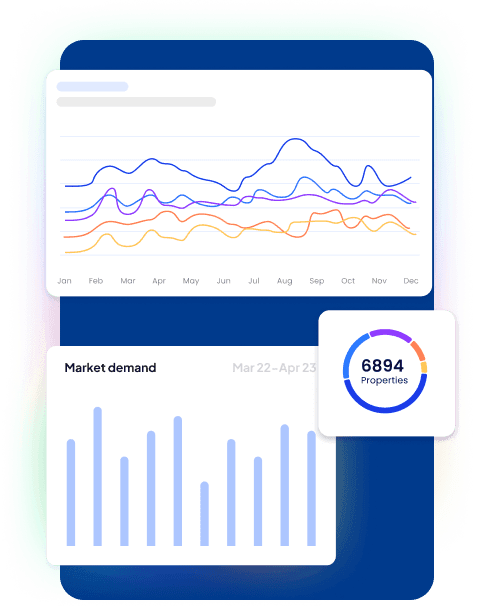
Use the baseline data to set your minimum and maximum nightly rates. Input your property details into a dynamic pricing tool like PriceLabs or Wheelhouse. These tools adjust your rates daily based on local events, seasonality, and competitor pricing. Ensure your minimum stay requirements align with local demand patterns. A two-night minimum might be standard, but a three-night minimum during peak summer weeks can significantly boost revenue.
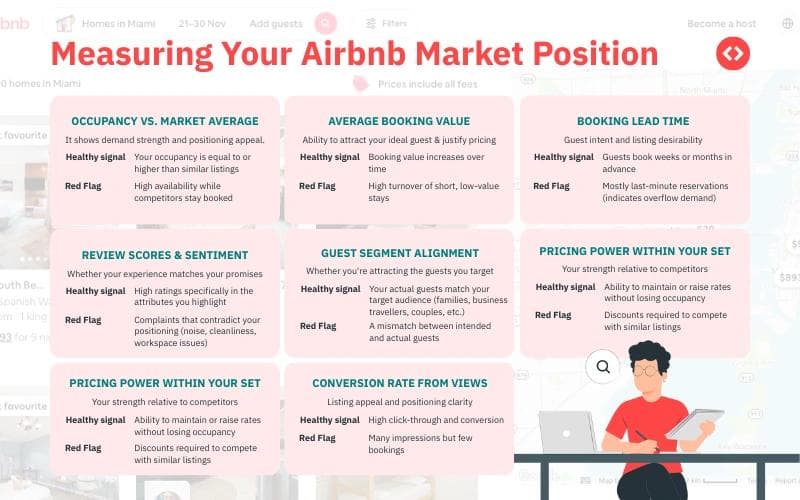
Review your performance metrics every week. Look at your occupancy rate relative to the market average. If you are underperforming, check your listing photos, description, and pricing. Small tweaks, such as updating your header image or adding a new amenity photo, can improve click-through rates. If occupancy is high but revenue is low, your pricing might be too aggressive. Raise rates incrementally to test the market’s tolerance.
Finally, correlate your data with guest feedback. Look for recurring comments in reviews about noise, cleanliness, or amenities. Use this qualitative data to refine your operational checklist. If guests consistently mention slow Wi-Fi, upgrade your service. If they praise your coffee selection, highlight it in your listing. Data tells you what is happening; reviews tell you why. Combine both to optimize your guest experience and boost your ROI.
-
Pull baseline occupancy and ADR from AirDNA or AirROI
-
Identify top 5 competitor listings for amenity comparison
-
Set up dynamic pricing with PriceLabs or Wheelhouse
-
Review performance metrics weekly and adjust rates
-
Analyze guest reviews for operational improvements
Fix common mistakes
Many hosts rely on surface-level metrics like total revenue or average daily rate without adjusting for vacancy or operating costs. This approach creates a false sense of security. You might see high booking volume, but after cleaning fees, platform commissions, and maintenance, the net profit could be negligible.
To avoid this, shift your focus to net operating income. Use analytics tools to track expenses alongside income. Identify which months or days drive actual profit, not just occupancy. This distinction separates profitable listings from those that are merely busy.
Another frequent error is ignoring local regulations and tax implications. Failing to account for transient occupancy taxes or short-term rental permits can lead to heavy fines. Always verify local laws before pricing your stay.
Finally, don’t set it and forget it. Prices should change based on real-time market data, not just your intuition. Regularly audit your performance against competitors in your specific neighborhood. Adjust your strategy monthly to stay competitive in a shifting market.
No comments yet. Be the first to share your thoughts!