
Get Your Airbnb Revenue Calculator Right
Before you plug numbers into a revenue calculator, you need to gather the right inputs. Garbage in, garbage out. A calculator is only as good as the data you feed it, so skip the guesswork.
First, find your market’s average daily rate (ADR) and occupancy. Don’t rely on generic national averages. Use tools like AirDNA or Rabbu to pull real short-term rental comp data for your specific zip code. These platforms update weekly, ensuring your projections reflect current demand rather than last year’s trends.
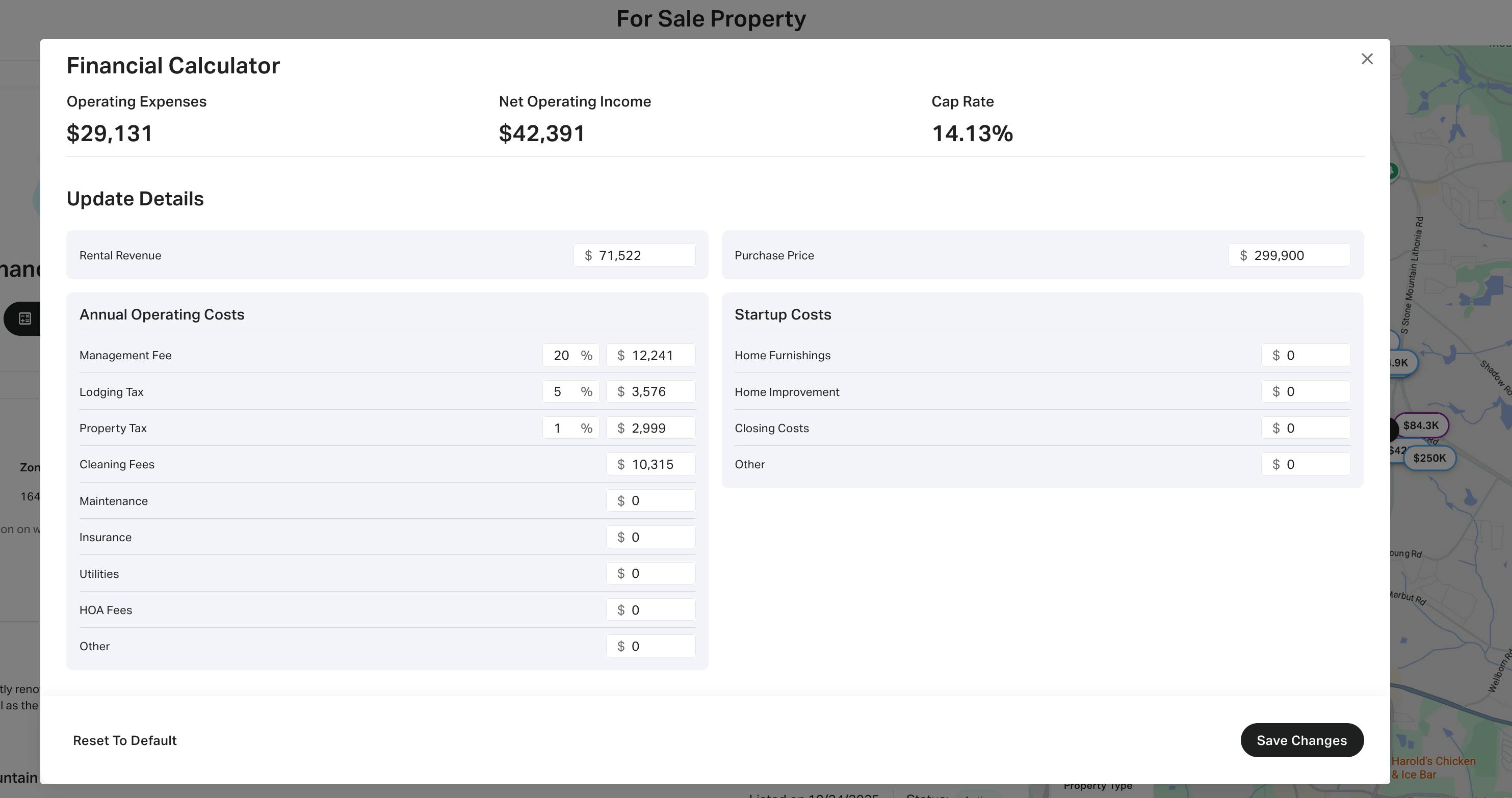
Next, list your fixed operating costs. This includes mortgage interest, property taxes, insurance, and HOA fees. Then, add variable costs: cleaning fees, utilities, Wi-Fi, and platform service fees. If you hire a property manager, include their percentage cut, which typically ranges from 20% to 30%.
Finally, decide on your growth assumption. Will occupancy stay flat, or will you increase rates seasonally? Most accurate models account for a 5-10% annual increase in ADR. Once you have these three elements—market comps, your actual expenses, and a conservative growth rate—you’re ready to calculate realistic ROI.
Work through the steps
Airbnb Revenue Calculator works best as a clear sequence: define the constraint, compare the realistic options, test the tradeoff, and choose the path with the fewest hidden costs. That order keeps the advice usable instead of decorative. After each step, pause long enough to check whether the recommendation still fits the reader's actual situation. If it depends on perfect timing, unusual access, or a best-case budget, include a simpler fallback.


Fix common mistakes
Most owners overestimate their Airbnb revenue because they ignore the friction between booking and payout. The gap between projected income and actual profit often comes down to three specific errors: inflated occupancy assumptions, hidden operational costs, and static pricing strategies. Correcting these errors is the difference between a profitable asset and a money-losing liability.
Inflated occupancy assumptions
New calculators often default to 70-80% occupancy, but 2026 market data shows this is unrealistic for most markets outside of peak season. Treating occupancy as a constant ignores seasonality and market saturation. Instead, use conservative estimates based on the "75-55 rule"—expecting 75% occupancy in peak months and 55% in shoulder seasons. This approach prevents you from relying on best-case scenarios that rarely materialize consistently.
Ignoring variable operational costs
Revenue is not profit. Many owners forget to include variable costs that scale with occupancy, such as cleaning fees paid to vendors, utility spikes, and Airbnb’s service fees (typically 3% for hosts). If your calculator only subtracts fixed mortgage payments, your ROI will look artificially high. Include a 15-20% variable cost buffer to account for turnover labor and maintenance supplies that increase with guest volume.
Static pricing models
Using a single nightly rate for the entire year is a major mistake. Dynamic pricing adjusts rates based on local events, demand spikes, and competitor availability. Tools like PriceLabs or Wheelhouse integrate directly with your listing to maximize revenue per available room (RevPAR). Without dynamic pricing, you leave money on the table during high-demand periods and struggle to attract bookings during slow weeks.
Airbnb revenue: what to check next
Before you list, clear up the common doubts about short-term rental math. These answers address the practical constraints that determine whether your property clears the profit threshold in 2026.
No comments yet. Be the first to share your thoughts!