
Short term rental resilience in 2026
Economic forecasts for 2026 are messy. Recession talk and inflation make people nervous, but short-term rentals are holding steady. I'm seeing demand stay high even when hotels start to struggle with empty rooms.
This isn’t simply about a "hot’ market; it"s about identifying locations demonstrating the ability to withstand economic headwinds and deliver consistent returns. Our analysis, drawing on data from AirDNA and Mashvisor, focuses on markets currently achieving a 20%+ return on investment (ROI) for STR properties. This benchmark represents a significant threshold for serious investors.
The data suggests a shift in travel patterns. While major metropolitan areas are recovering, many smaller cities and leisure destinations are experiencing unprecedented demand. Remote work continues to fuel longer stays, and travelers are increasingly seeking unique experiences over traditional hotel accommodations. These factors are driving performance in unexpected places.
Your actual return depends on how you manage the place and what the local laws allow. You need a solid ROI calculator to get the numbers right before buying. Here is where the data shows the best opportunities right now.
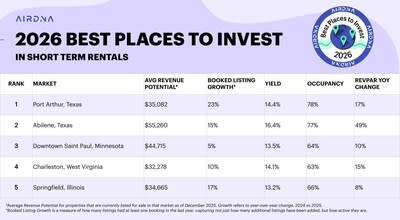
Eleven markets hitting the 20% ROI mark
The following 12 markets consistently demonstrate strong performance metrics as of late 2023 and early 2024, with projections indicating continued success through 2026. Occupancy rates and average daily rates (ADR) are based on data compiled from AirDNA and Mashvisor, and ROI estimates are conservative, assuming professional property management.
1. Gatlinburg/Pigeon Forge, Tennessee: Occupancy rates average 78%, with an ADR of $220. Estimated annual revenue for a 2-bedroom cabin: $65,000 - $80,000. The area’s popularity as a family vacation destination and proximity to the Great Smoky Mountains National Park drive consistent demand.
2. Panama City Beach, Florida: Occupancy 72%, ADR $200. Annual revenue (2-bedroom condo): $55,000 - $70,000. Spring break and summer tourism are massive drivers, but demand remains strong year-round.
3. Myrtle Beach, South Carolina: Occupancy 69%, ADR $180. Annual revenue (2-bedroom condo): $50,000 - $65,000. Similar to Panama City Beach, Myrtle Beach benefits from a robust tourism industry and a relatively affordable cost of entry.
4. Destin, Florida: Occupancy 75%, ADR $250. Annual revenue (2-bedroom condo): $70,000 - $90,000. Upscale tourism and beautiful beaches contribute to higher ADRs and strong occupancy.
5. Asheville, North Carolina: Occupancy 70%, ADR $210. Annual revenue (2-bedroom cottage): $60,000 - $75,000. A thriving arts scene, craft breweries, and outdoor recreation attract a diverse range of visitors.
6. Orlando, Florida (non-Disney areas): Occupancy 65%, ADR $160. Annual revenue (2-bedroom townhouse): $50,000 - $60,000. While Disney drives tourism, areas outside the immediate theme park zones offer more affordable investment options.
7. Savannah, Georgia: Occupancy 68%, ADR $190. Annual revenue (1-bedroom apartment in historic district): $45,000 - $60,000. Historic charm and a growing culinary scene make Savannah a popular destination.
8. Gulf Shores, Alabama: Occupancy 73%, ADR $170. Annual revenue (2-bedroom condo): $52,000 - $68,000. A family-friendly beach destination with a more relaxed atmosphere than Florida’s busier beaches.
9. Hilton Head Island, South Carolina: Occupancy 67%, ADR $230. Annual revenue (2-bedroom villa): $65,000 - $85,000. Golf, tennis, and upscale resorts drive demand in this market.
10. Phoenix, Arizona (Scottsdale areas): Occupancy 62%, ADR $185. Annual revenue (2-bedroom casita): $48,000 - $60,000. Winter visitors seeking warmer weather and outdoor activities fuel demand.
11. Oklahoma City, Oklahoma: Occupancy 65%, ADR $120. Annual revenue (2-bedroom apartment): $35,000 - $45,000. A surprisingly strong market benefitting from revitalization efforts and a growing events calendar. Lower property costs contribute to higher ROI.
Short Term Rental Investment Hotspots 2026: Performance & Key Drivers
| City | State | Occupancy Rate (%) | Average Daily Rate ($) | Estimated Annual Revenue |
|---|---|---|---|---|
| Orlando | FL | 78.5% | 215 | Approximately $85,000 - $120,000 |
| Nashville | TN | 75.2% | 200 | Approximately $70,000 - $100,000 |
| Phoenix | AZ | 72.8% | 185 | Approximately $65,000 - $90,000 |
| Myrtle Beach | SC | 79.1% | 170 | Approximately $60,000 - $85,000 |
| Savannah | GA | 76.3% | 190 | Approximately $55,000 - $75,000 |
| New Orleans | LA | 70.4% | 165 | Approximately $50,000 - $70,000 |
| Gatlinburg | TN | 74.9% | 180 | Approximately $45,000 - $65,000 |
| Kansas City | MO | 68.7% | 150 | Approximately $40,000 - $60,000 |
Illustrative comparison based on the article research brief. Verify current pricing, limits, and product details in the official docs before relying on it.
A closer look at Asheville
Asheville is a staple for a reason. People come for the Blue Ridge Mountains, but they stay for the breweries and the arts district. Demand doesn't really drop off, though it definitely spikes when the leaves change in October.
Within Asheville, certain neighborhoods perform particularly well. The River Arts District, with its converted warehouses and artist studios, is highly sought after. Downtown Asheville, with its eclectic shops and restaurants, also commands premium rates. However, properties just outside the city center, offering more space and privacy, are becoming increasingly popular.
Small cabins and cottages are particularly successful in the Asheville market, catering to couples and small families seeking a secluded getaway. Downtown condos, appealing to those wanting walkable access to amenities, also generate strong revenue. However, local regulations are becoming stricter, with the city council recently implementing new permitting requirements for STRs.
Seasonality plays a role, with October and November typically being the busiest months. However, Asheville’s appeal extends beyond the fall. Summer brings outdoor enthusiasts, while winter attracts visitors seeking a cozy mountain escape. Understanding these seasonal fluctuations is essential for maximizing revenue.
Navigating regulations and saturation
Investing in STRs isn’t without risk. The increasing popularity of the sector is attracting attention from local governments, leading to more stringent regulations. These can include permit requirements, zoning restrictions, occupancy limits, and even outright bans on STRs in certain areas.
Market saturation is another concern. In some popular destinations, the supply of STRs is growing faster than demand, leading to lower occupancy rates and reduced revenue. This is particularly true in markets where the majority of properties are managed by a few large companies.
To mitigate these risks, thorough due diligence is paramount. Investors should carefully research local regulations before making any investment. Working with a local property manager who understands the market and can navigate the regulatory landscape is also highly recommended.
Diversification is another key strategy. Spreading investments across multiple markets can reduce exposure to localized risks. Consider exploring emerging markets with less competition and more favorable regulatory environments.
- Check the local zoning laws yourself instead of trusting a listing description.
- Work with a local property manager.
- Diversify your investments.
- Monitor market saturation levels.
Financing your rental
Securing financing for STR investments can be different than obtaining a traditional mortgage. Traditional mortgages are available, but lenders may require a higher down payment and scrutinize rental income more closely. Portfolio loans, offered by smaller banks and credit unions, can be more flexible.
DSCR (Debt Service Coverage Ratio) loans are becoming increasingly popular among STR investors. These loans are based on the property’s potential rental income, rather than the borrower’s personal income. A DSCR of 1.2 or higher is typically required, meaning the property’s rental income must exceed the mortgage payment by at least 20%.
Hard money loans offer a quick and convenient source of financing, but they typically come with higher interest rates and shorter repayment terms. These loans are often used for fix-and-flip projects or for investors who need to close quickly. Current interest rates vary, but expect to pay between 8% and 12% for a hard money loan.
Lending criteria are becoming more stringent, with lenders focusing on factors such as credit score, debt-to-income ratio, and the property’s potential for generating consistent rental income. It’s essential to shop around and compare offers from multiple lenders.
Software for tracking potential returns
Data is your greatest asset when evaluating potential STR investments. Several tools can help you estimate revenue, occupancy rates, and potential ROI. AirDNA is a leading provider of STR data, offering insights into occupancy, ADR, and revenue in markets across the globe. Mashvisor provides similar data, along with tools for analyzing property values and identifying investment opportunities.
AirDNA allows you to explore market-level data, drill down to specific neighborhoods, and compare properties. You can analyze historical performance, forecast future revenue, and identify potential gaps in the market. Mashvisor offers a similar suite of tools, with a focus on vacation rental profitability.
Both platforms offer subscription-based access to their data. Pricing varies depending on the level of detail and the number of markets you want to analyze. BNB Stats is a complementary tool for ongoing performance tracking, allowing you to monitor your own STR properties and benchmark your results against the competition.
Learning to effectively utilize these tools is crucial for making informed investment decisions. Take advantage of free trials and online tutorials to master their features and unlock their full potential. A well-informed investor is a successful investor.
Standout Markets: Emerging Opportunities
While the top 12 markets offer established potential, several emerging opportunities deserve attention. Boise, Idaho, is experiencing rapid growth and attracting a younger, more affluent demographic. Demand for STRs is increasing, but the market is still relatively underserved.
Chattanooga, Tennessee, is another promising market, with a thriving outdoor scene and a growing arts community. The city is attracting remote workers and tourists alike. Kansas City, Missouri, is undergoing a revitalization, with new restaurants, breweries, and entertainment venues opening up. The city’s affordability and central location make it an attractive investment destination.
Bentonville, Arkansas, benefits from the presence of Walmart headquarters and a growing mountain biking scene. The city is attracting a mix of business travelers and outdoor enthusiasts. These markets offer the potential for higher ROI as demand continues to grow and property values appreciate.
No comments yet. Be the first to share your thoughts!