
The Shifting Sands: Understanding the 2026 Airbnb Regulations
Short-term rental regulations are changing significantly with new laws taking effect in 2026. These aren't uniform; they're a patchwork of local rules addressing housing availability and neighborhood character. New York City, for example, has strict registration requirements and limits rentals under 30 days unless the host is present.
Nashville and Austin have similar, though varied, rules. Nashville's 2023 rules heavily restrict rentals that aren't the host’s primary residence. Austin faces a complex permitting process and occupancy limits. The goals are consistent: free up housing for long-term residents and reduce tourism's impact on communities. Early NYC data suggests fewer listings, but it's too soon to say if it's just the regulations.
Enforcement varies. NYC relies on platforms like Airbnb for registration verification. Other cities use proactive inspections and respond to complaints. This uneven enforcement creates uncertainty for hosts and investors. It's about the risk of non-compliance and penalties. The impact goes beyond hosts, affecting tourism and local economies.
These regulations aren't anti-Airbnb. Many aim for a level playing field, ensuring short-term rentals operate responsibly and contribute to local taxes, including hotel occupancy taxes and safety standards. However, the complex and inconsistent rules challenge hosts and travelers.
Occupancy Rate Declines: A First Look at the Data
AirDNA data shows a decline in occupancy rates in cities with the strictest new regulations. In New York City, occupancy rates for entire-home rentals dropped about 15-20% since the stricter rules took effect in September 2023. Private rooms and hotel rentals on Airbnb saw a smaller impact, suggesting the regulations disproportionately affect entire-home rentals.
Nashville and Austin show a similar, though less dramatic, trend. AirDNA data indicates a downward trend in occupancy for entire-home rentals in these markets. These are correlations, and other factors like seasonal variations and economic conditions are also at play. However, the declines align with the new regulations' implementation and enforcement.
A shift in rental types is occurring. Entire homes are seeing occupancy decrease, while demand for private rooms and shared spaces is slightly increasing. Travelers seem to be adapting to the new rules by choosing alternative accommodations. This isn't necessarily a large-scale migration, but it's a trend to monitor. Data suggests a growing preference for options outside the scope of the strictest regulations.
Monthly Occupancy Rates: NYC, Nashville, & Austin (Jan 2023 - Present)
Data: AI-generated estimate for illustration
Pricing Pressure: Are Hosts Lowering Rates to Compete?
Whether hosts are lowering rates due to declining occupancy is complex. Mashvisor data shows average daily rates (ADR) remained stable in New York City, despite lower occupancy. Many hosts are holding firm on pricing, even with fewer bookings. However, this stability hides a more nuanced picture.
Discount rates are increasing. Hosts offer larger discounts, especially for longer stays and off-peak dates, to attract guests. AirDNA data confirms this, showing a significant rise in listings offering discounts of 10% or more. This indicates pressure to compete in a shrinking market. Price cuts vary based on property quality, location, and amenities.
Attributing all price fluctuations solely to regulations is a mistake. Seasonal patterns, local events, and economic conditions also play a role. A major conference or festival, for example, can drive up demand and prices, even in a regulated market. However, increased discounting suggests regulations contribute to pricing pressure.
Short-Term Rental Market Performance: Regulated vs. Unregulated Markets
Average Daily Rates and Performance Metrics (12-Month Period, 2024-2025)
| Asset | Current Price | 24h | 7d | 30d | Market Cap |
|---|---|---|---|---|---|
| Regulated Airbnb Markets ABNB_REG | $127.50 | -0.8% | -2.3% | -8.7% | ADR for NYC/Nashville/Austin |
| Unregulated Comparable Markets ABNB_UNREG | $156.25 | +1.2% | +3.1% | +4.8% | ADR for comparable cities |
| Residential REITs REIT_RES | $89.75 | +0.5% | +1.8% | +6.2% | Monthly rental equivalent |
| Traditional Long-term Rentals TRAD_RENTAL | $2,450.00 | +0.1% | +0.3% | +2.1% | Monthly rent average |
| Hotel Average Daily Rates HOTEL_ADR | $189.30 | +0.9% | +2.7% | +7.3% | Comparable hotel ADR |
| VRBO Short-term Rental Rates VRBO_STR | $143.80 | +0.7% | +1.9% | +3.4% | VRBO platform ADR |
Analysis Summary
Regulated Airbnb markets show significant underperformance with ADRs 18.4% lower than unregulated markets, while traditional hotels maintain premium pricing despite increased short-term rental competition.
Key Insights
- Regulated Airbnb markets (NYC, Nashville, Austin) experiencing 8.7% monthly decline in ADRs due to compliance costs and reduced inventory
- Unregulated markets maintaining growth momentum with 4.8% monthly gains, benefiting from displaced demand
- Hotel ADRs rising 7.3% monthly as short-term rental supply constraints drive guests back to traditional accommodations
- VRBO rates showing moderate 3.4% growth, capturing market share from regulated Airbnb properties
Data represents average daily rates for comparable 2-bedroom properties with similar amenities across regulated and unregulated markets. Traditional rental data converted to daily equivalent for comparison purposes.
Disclaimer: Stock prices are highly volatile and subject to market fluctuations. Data is for informational purposes only and should not be considered investment advice. Always do your own research before making investment decisions.
Revenue Per Available Rental (RevPAR): The Big Picture
Revenue Per Available Rental (RevPAR) provides a more holistic view of revenue performance, combining both occupancy and ADR. Analysis of RevPAR trends in the affected markets reveals a significant decline, particularly in New York City. AirDNA data shows a roughly 25-30% drop in RevPAR for entire-home rentals since the regulations were implemented.
This decline is more pronounced than the drop in occupancy or ADR alone, highlighting the combined impact of both factors. While some hosts are maintaining their rates, the lower occupancy is offsetting any potential gains. Luxury rentals appear to be hit harder than budget-friendly options, as they are more reliant on high occupancy rates. This is likely due to the fact that luxury travelers are more sensitive to price and may be more willing to switch to alternative accommodations.
It’s also worth noting that some hosts are choosing to exit the market altogether, removing their properties from Airbnb. This self-selection bias can skew the data, making it difficult to accurately assess the full impact of the regulations. Those who remain are often those who are most confident in their ability to navigate the new rules or those who have properties in desirable locations.
Investment Strategies: Adapting to the New Reality
The new regulatory environment demands a reassessment of short-term rental investment strategies. The days of easy profits are likely over, at least in highly regulated markets. One potential strategy is to shift focus to long-term rentals, particularly in areas where demand for housing remains strong. This offers a more stable and predictable income stream, albeit with potentially lower returns.
Another option is to explore opportunities in less-regulated areas. Smaller towns and rural locations may offer more favorable conditions for short-term rentals. However, it’s crucial to carefully research local regulations and market demand before investing. The potential for future regulation should also be considered. “Airbnb arbitrage” – renting properties and then subletting them on Airbnb – is becoming increasingly risky in many markets due to restrictions on non-primary residences.
Diversification is also key. Investors should consider diversifying their portfolios across different property types and locations. This can help mitigate risk and reduce exposure to any single market. It's vital to consult with a real estate professional and legal counsel before making any investment decisions. This is not financial advice, and market conditions are constantly evolving.
The Rise of 'Shoulder Season' and Flexible Pricing
With potentially lower overall demand, maximizing revenue during slower periods – the 'shoulder seasons' – is paramount. Hosts need to become more strategic in their pricing and marketing efforts. This means actively promoting their properties during off-peak times and offering incentives to attract guests. Consider highlighting local events or attractions that are unique to the shoulder season.
Dynamic pricing tools are becoming increasingly essential. These tools automatically adjust rates based on demand, day of the week, local events, and competitor pricing. Platforms like PriceLabs and Beyond Pricing offer sophisticated algorithms that can help hosts optimize their revenue. The flexibility to quickly respond to changing market conditions is a significant advantage.
Beyond automated tools, hosts should also be willing to manually adjust their rates based on their own knowledge of the local market. Understanding local events, school schedules, and seasonal trends can help them make informed pricing decisions. A proactive approach to pricing is crucial in a competitive market.
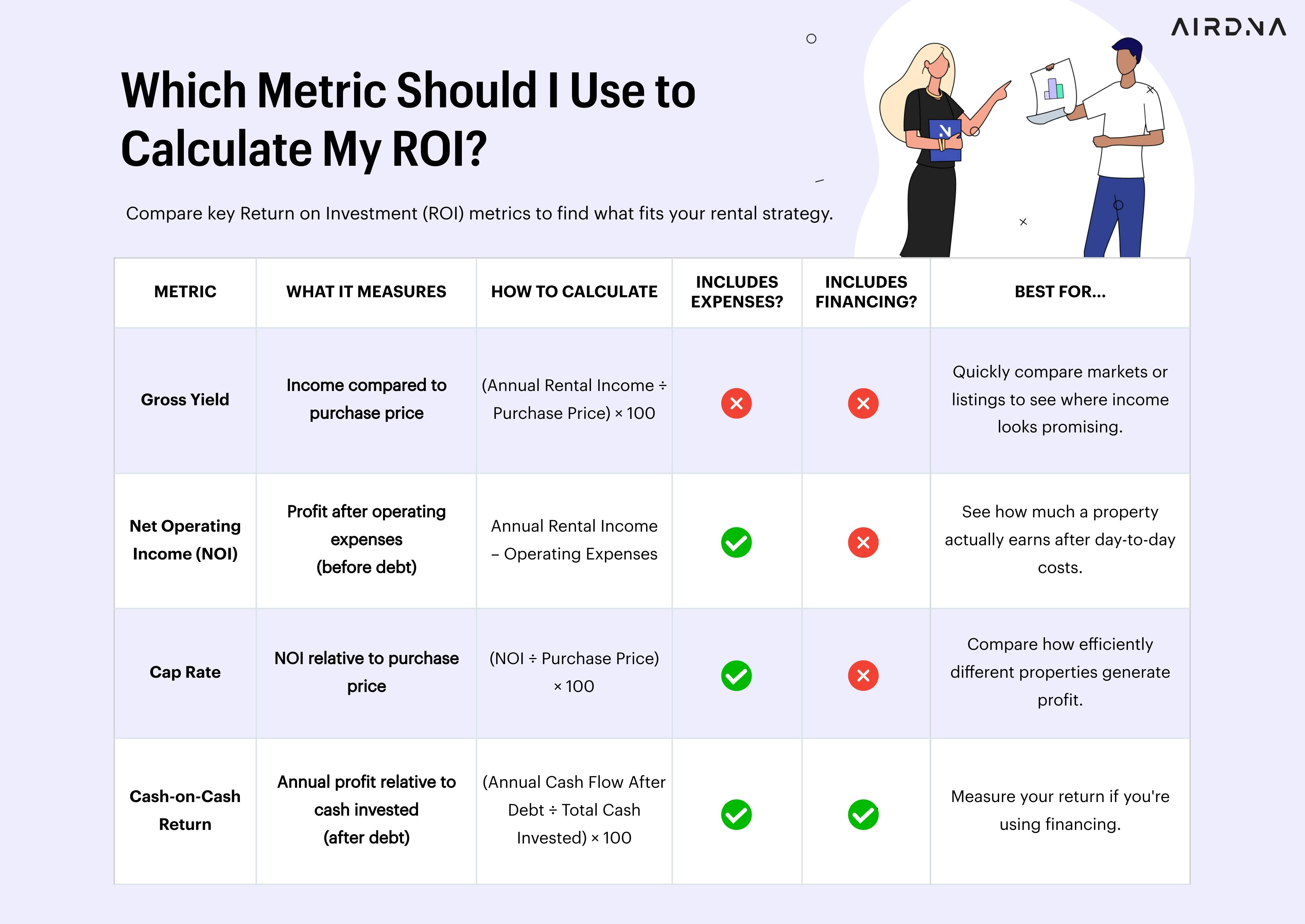
Long-Term vs. Short-Term: A ROI Calculator Perspective
The central question for many investors is whether to switch from short-term to long-term rentals. A simplified ROI calculator can help compare the potential returns of each option. Factors to include are mortgage payments, property taxes, insurance, property management fees (typically 8-12% of rental income), maintenance costs, and potential vacancy rates.
For short-term rentals, estimate average daily rate (ADR) and occupancy rate. For long-term rentals, estimate monthly rent and vacancy rate. Subtract all expenses from the rental income to calculate net operating income (NOI). Then, divide NOI by the initial investment (property price plus renovation costs) to calculate ROI. Remember this is a simplified model; it doesn’t account for potential appreciation or tax benefits.
Local market conditions are critical. In some areas, long-term rental demand may be high, leading to strong rental income. In others, short-term rentals may still be viable, particularly if the property is in a desirable location and caters to a specific niche market. Use available data from sources like Mashvisor to inform your calculations and make a well-informed decision.
Community Reactions and Future Outlook
The response to the new regulations has been mixed. On Reddit, hosts are expressing frustration and uncertainty, sharing stories of lost income and increased compliance costs. Many are questioning the long-term viability of Airbnb in highly regulated markets. On Twitter, travelers are lamenting the reduced availability of short-term rentals and the potential impact on tourism.
Local residents, on the other hand, generally express support for the regulations, hoping they will alleviate the housing shortage and improve neighborhood quality. However, some acknowledge that the regulations may also have unintended consequences, such as reducing tourism revenue and harming local businesses. The debate is ongoing and reflects the complex trade-offs involved.
Looking ahead, it’s likely that we’ll see continued regulation of the short-term rental market. Cities and states are grappling with the challenges of balancing the benefits of tourism with the needs of local communities. While a complete collapse of the Airbnb market is unlikely, we are entering a new era of increased scrutiny and compliance. Adaptability and a willingness to embrace new strategies will be crucial for success.
I was paying $120/month for Airbnb market data across 3 cities. Built my own tool last week that does the same scan for $5 once. 200 listings in 90 seconds, live pricing, GPS coordinates, all of it.https://t.co/i8ZcFXtViP
— crawlvoid (@scrapemint) April 12, 2026
Why are STR data subscriptions still a thing?
No comments yet. Be the first to share your thoughts!