Get Airbnb Market Data Right
Before running any revenue projections, you need verified local data. Generic national averages will mislead your underwriting. You need granular metrics for your specific zip code or neighborhood.
Start with a dedicated STR analytics platform. Tools like AirDNA and AirROI aggregate booking data from Airbnb, Vrbo, and other channels. They provide the occupancy rates, average nightly prices, and revenue estimates you need. Without this baseline, your calculator inputs are just guesses.
Focus on three core metrics:
- Occupancy Rate: The percentage of nights booked. This is your volume driver.
- Average Daily Rate (ADR): Your average nightly price. This is your price driver.
- Revenue Per Available Room (RevPAR): ADR multiplied by occupancy. This is your true performance metric.
Do not rely on the host’s self-reported revenue. Many listings inflate their numbers. Use third-party data to triangulate the truth. If one tool shows 70% occupancy and another shows 50%, take the conservative estimate. Underestimating is safer than overestimating.
Check the data freshness. STR markets shift fast. A tool showing data from six months ago is already outdated. Ensure your source updates weekly or monthly. Use the most recent 12-month window to smooth out seasonal spikes. This gives you a realistic baseline for your 2026 projections.
Walk through the steps
Start by pulling fresh occupancy data for your specific zip code or neighborhood. Platforms like AirDNA or Airbtics provide this baseline, showing how often similar units are booked. Without this local context, any revenue estimate is just a guess. Look for the trailing twelve-month (TTM) occupancy rate, as it smooths out seasonal spikes and gives you a realistic average.
Next, estimate your daily rate using the median nightly price from the same market data. Don’t just pick the top-performing listings; look at the median or average of the top 25% of competitors. This sets your baseline revenue. Multiply this daily rate by your estimated occupancy days to get your gross revenue. This figure represents the total money coming in before any expenses.
Now, subtract your operating costs to find your net operating income (NOI). These costs include cleaning fees, property management fees (usually 20-25% of gross), utilities, internet, and maintenance. A common mistake is underestimating maintenance; set aside 10% of gross revenue for repairs and replacements. Subtract platform fees (Airbnb typically takes 15%) and local taxes. What remains is your true monthly cash flow.
Finally, calculate your return on investment (ROI) by dividing your annual NOI by your total startup costs. Startup costs include the down payment, closing costs, furniture, and initial repairs. If your ROI is below 8-10%, the property may not be worth the effort compared to other investments. Use this formula to compare multiple properties or to negotiate a better purchase price if you are still in the acquisition phase.
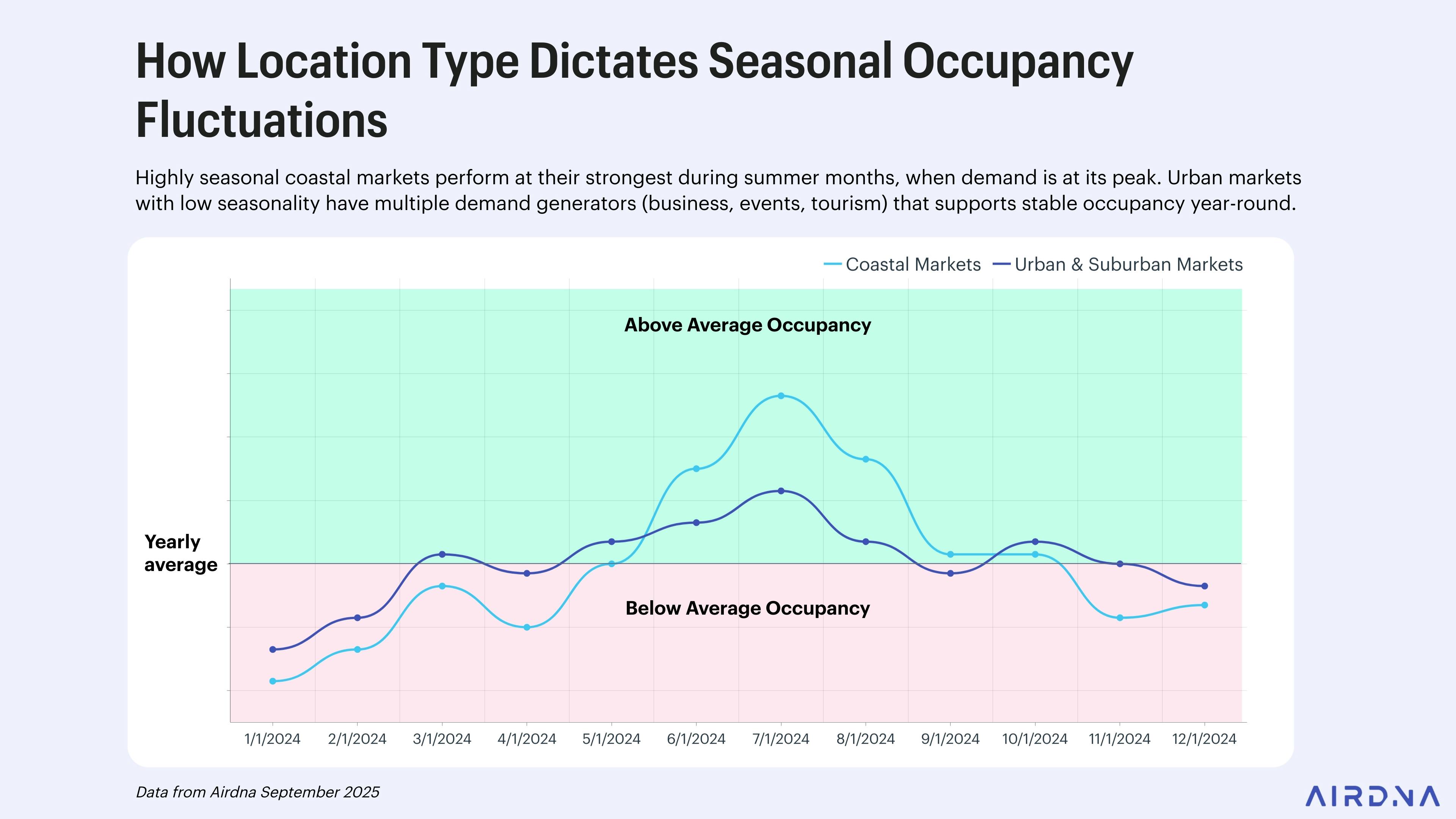
Use AirDNA or Airbtics to find the TTM occupancy rate for your specific neighborhood. This is your baseline booking probability.
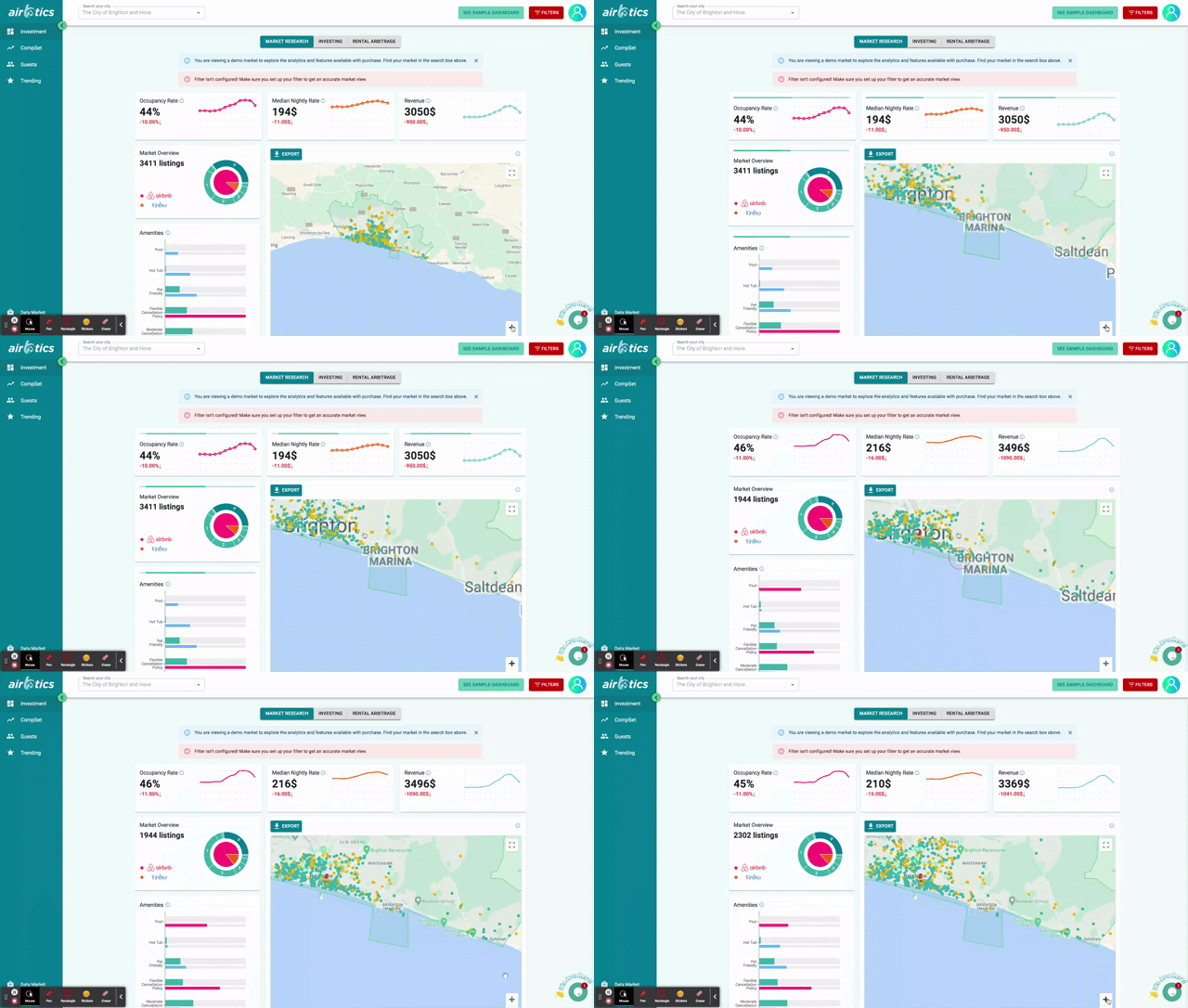
Pull the median ADR from top competitors. Multiply this by your estimated occupancy days to get gross revenue.
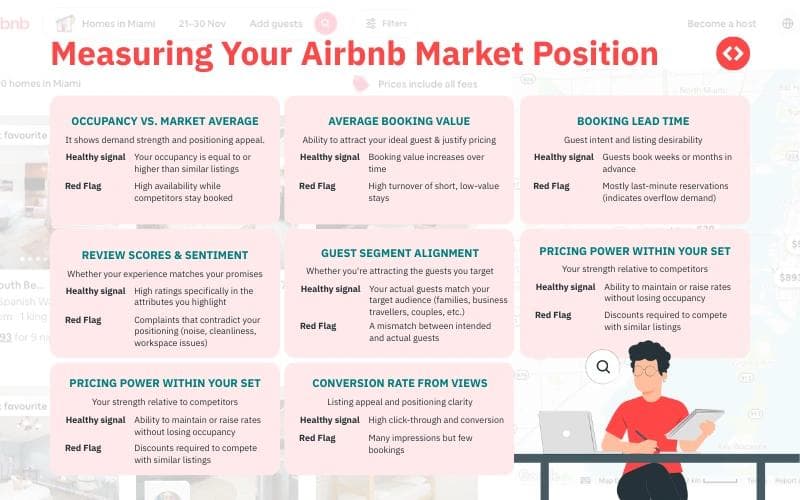
Deduct cleaning, management (20-25%), utilities, and 10% for maintenance. Subtract platform fees (15%) and taxes.
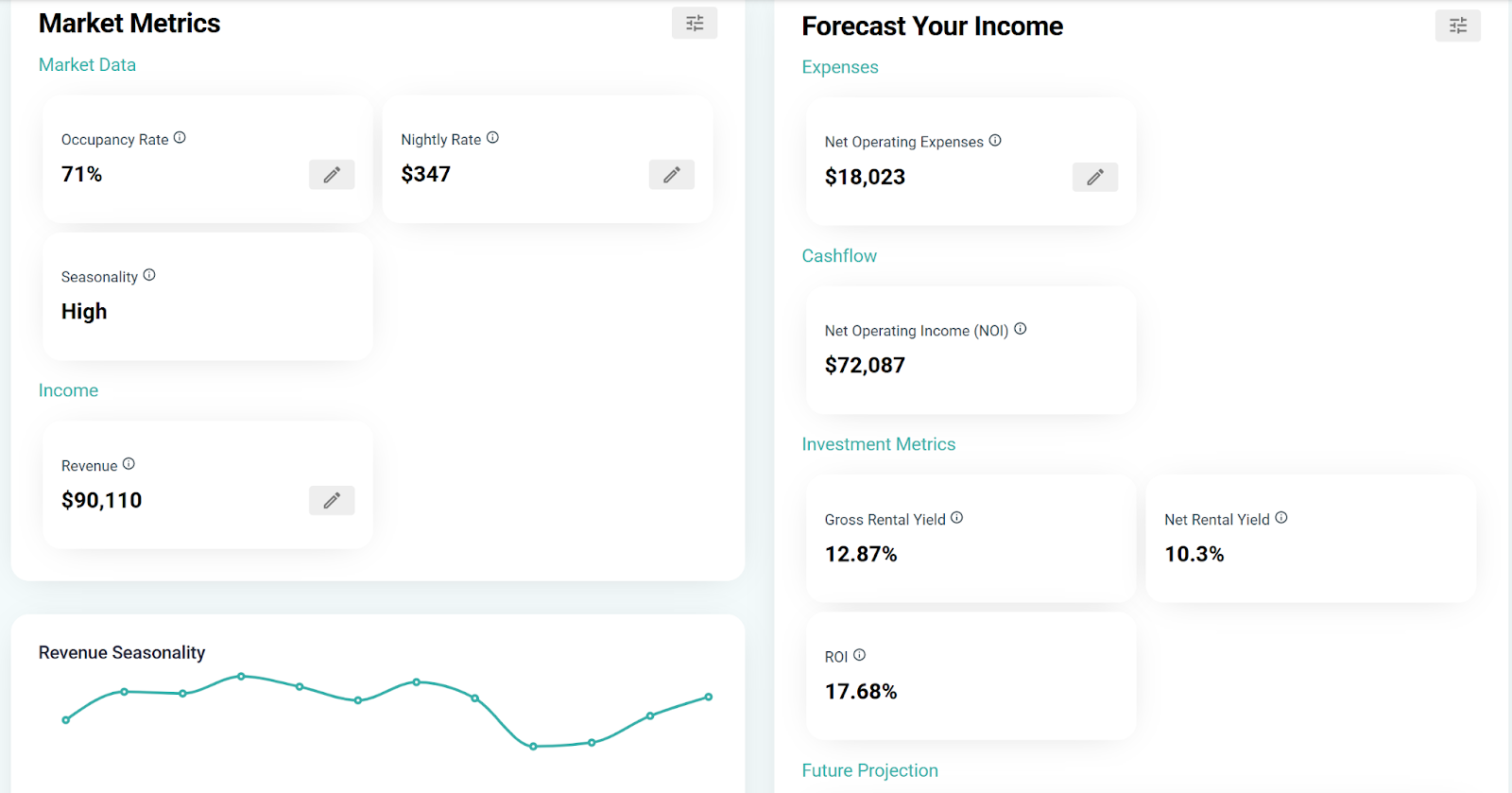
Divide your annual net operating income by your total startup costs (down payment, closing, furniture). Aim for 8-10% minimum.
Fix common mistakes
Even with solid market data, small errors in your setup can erode profit margins or trigger platform penalties. The most frequent pitfalls involve misaligned pricing assumptions, ignoring local regulations, and overlooking hidden operational costs.
Ignoring local regulations and taxes
Many hosts assume their city allows short-term rentals without registration. This oversight can lead to fines, forced closures, or legal action. Always verify local zoning laws and obtain necessary permits before listing.
Overestimating occupancy rates
Using generic market averages without adjusting for your property’s specific seasonality leads to inflated revenue projections. Use tools like AirDNA to analyze historical data for your exact neighborhood.
Underestimating operational costs
Cleaning fees and maintenance are often underestimated. Include a buffer for unexpected repairs, software subscriptions, and utility fluctuations to ensure your net profit calculations are realistic.
Airbnb market data: what to check next
Here are the practical answers to the most common questions about short-term rental market data.
No comments yet. Be the first to share your thoughts!