
The problem with static rates
I've seen too many hosts set a flat $150 rate and walk away. It's a mistake. You're ignoring how the market actually moves. If a festival hits town, you're underpriced; if it's a rainy Tuesday in November, you're empty. Static rates don't account for the reality that demand shifts daily.
Consider a scenario: you’ve set your rate at $150 per night. During peak season, or when a major convention is in town, your property could easily command $250 or even $300. Conversely, during the off-season, you might struggle to fill vacancies at $150. A static rate doesn’t adapt to these shifts, meaning you’re either losing potential revenue or missing out on bookings.
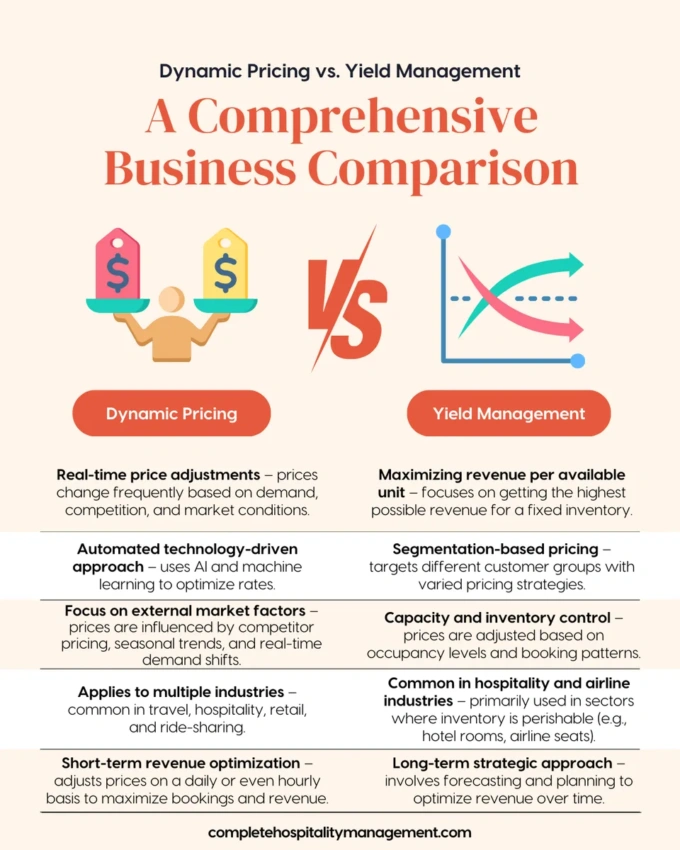
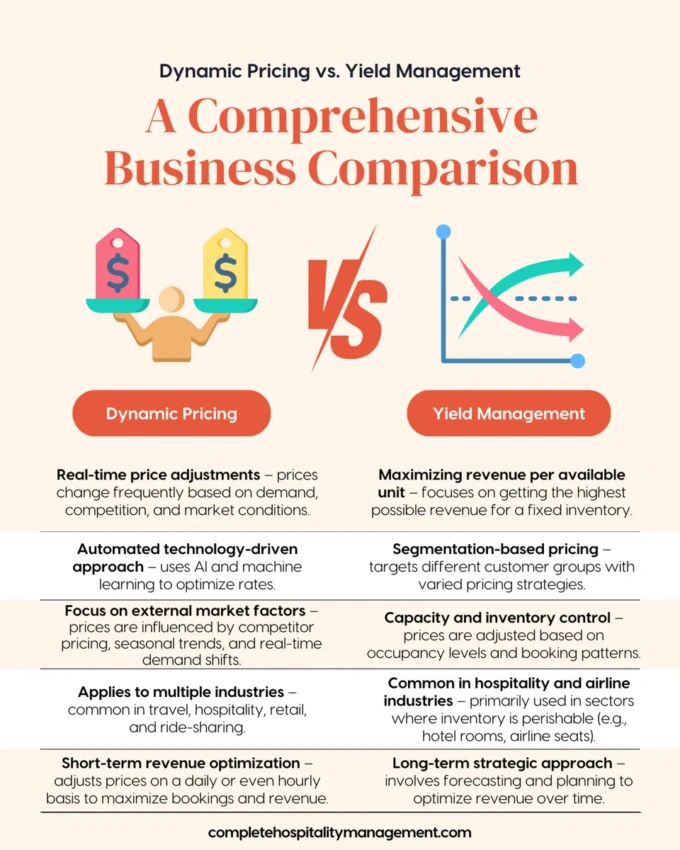
Historically, adjusting rates was a manual process – hosts would periodically scan the market and make changes. This was time-consuming and often reactive, rather than proactive. The evolution of dynamic pricing, powered by readily available airbnb market data, has changed that. Now, algorithms and software can automate these adjustments, reacting to real-time conditions and maximizing your income. This isn’t just for large hotel chains anymore; it’s a powerful tool accessible to every Airbnb host.
The core benefit is simple: increased revenue. But dynamic pricing also improves occupancy rates, optimizes profitability, and frees up your time. It’s about working with the market, not against it. Ignoring these tools means accepting a lower return on your investment.
Making sense of the numbers
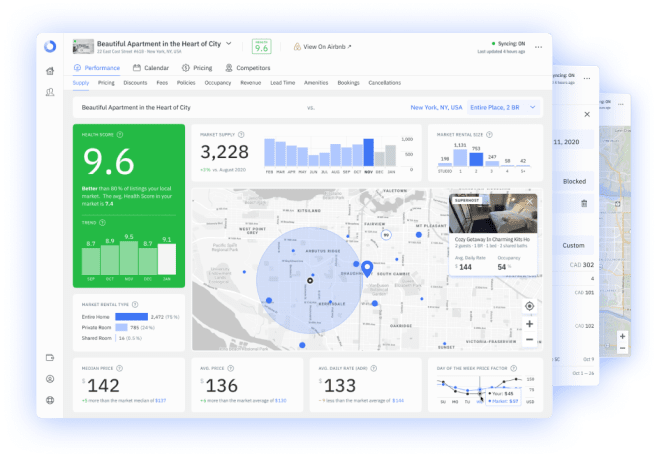
Dynamic pricing hinges on understanding key performance indicators. Several metrics are essential for making informed pricing decisions. Occupancy rate, for example, tells you the percentage of nights your property is booked. A high occupancy rate generally indicates that your pricing is competitive, but it doesn’t necessarily mean you’re maximizing revenue. You could be leaving money on the table with underpriced bookings.
Average Daily Rate (ADR) is the average revenue earned per night that your property is occupied. It’s a useful metric, but it can be misleading if not considered alongside occupancy. A high ADR with low occupancy isn’t ideal. Revenue Per Available Room (RevPAR) combines both occupancy and ADR, providing a more holistic view of your performance. RevPAR is calculated by multiplying occupancy rate by ADR. A rising RevPAR indicates you’re effectively maximizing both bookings and revenue.
Watch your length of stay. I usually charge more for one-nighters to cover the cleaning headache, while giving a break to anyone staying a week. You can pull these averages from AirDNA or Mashvisor. AirDNA is particularly good for seeing what neighbors are getting for their ADR and RevPAR.
Don't trust these apps blindly. The data is often laggy or just plain wrong. I always cross-reference app suggestions against what I see on the actual Airbnb map. Local knowledge beats an algorithm every time.
Watching the competition in real time
Knowing what similar properties in your area are charging is fundamental to effective dynamic pricing. This isn’t about blindly matching competitor rates; it’s about understanding your competitive position and adjusting your pricing accordingly. Identifying truly comparable listings is the first step. Consider factors like size, number of bedrooms and bathrooms, amenities (pool, hot tub, Wi-Fi), location, and overall quality.
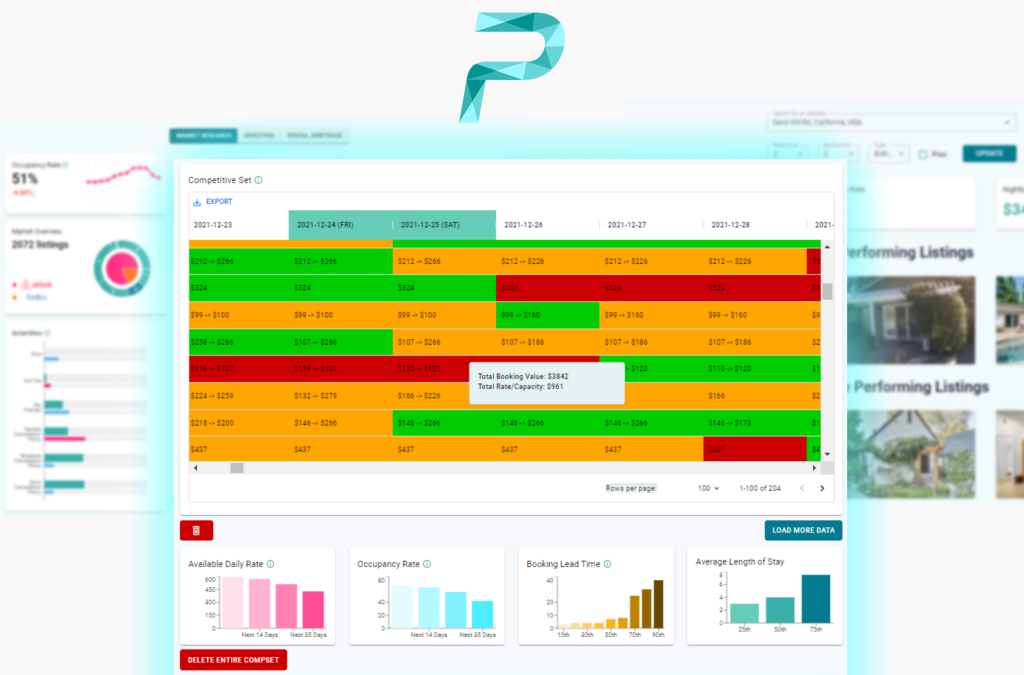
Once you’ve identified your competitive set, you need to monitor their pricing in real-time. This can be done manually, by regularly checking their listings on Airbnb. AirDNA offers competitive set features that automate this process, tracking competitor rates and providing insights into market trends. However, even with these tools, manual verification is often necessary.
Consider the impact of unique selling points. If your property has a feature that competitors lack – a stunning view, a private garden, or a particularly convenient location – you can justify a higher price. Conversely, if your property is lacking in certain areas, you may need to price more competitively. The goal is to find the sweet spot that maximizes both occupancy and revenue.
Listing Comparability Assessment - Dynamic Pricing Context
| Factor | Your Listing | Competitor Listing A | Competitor Listing B |
|---|---|---|---|
| Property Type | Apartment | House | Condo |
| Number of Bedrooms | 2 | 3 | 2 |
| Amenities (Pool, Wifi, Parking) | Wifi, Parking | Pool, Wifi, Parking | Wifi |
| Location (Proximity to Attractions) | Similar | Better | Worse |
| Location (Safety) | Better | Similar | Similar |
| Guest Capacity | 4 | 6 | 4 |
| Overall Condition | Well-maintained | Newly Renovated | Average |
Illustrative comparison based on the article research brief. Verify current pricing, limits, and product details in the official docs before relying on it.
Demand Drivers: Events & Seasonality
Local events and seasonal trends are significant drivers of demand for short-term rentals. Festivals, concerts, sporting events, and conferences can all lead to a surge in bookings and higher prices. Similarly, seasonal trends like summer vacation, holidays, and school breaks create predictable peaks in demand. Identifying these demand drivers and anticipating their impact is crucial for dynamic pricing.
For example, if a major music festival is scheduled in your city, you can expect a significant increase in demand for accommodations. Start increasing your rates well in advance of the event, and monitor competitor pricing closely. Similarly, during peak summer season, you can generally charge higher rates than during the off-season. Different property types will respond differently to these drivers. A beachfront property will see a larger spike in demand during the summer than a property located inland.
Consider the lead time. Bookings made further in advance are often willing to pay a premium, while last-minute bookings may require discounts to fill vacancies. Use this information to create tiered pricing rules. Researching local event calendars and tourism websites will help you identify upcoming demand drivers. Don't underestimate the impact of smaller, local events – even a popular farmers market can boost demand.
Automation tools for 2026
Several dynamic pricing tools are available to help Airbnb hosts automate this process. Beyond Pricing, PriceLabs, and Wheelhouse are among the most popular options. These tools integrate with Airbnb and other property management systems, allowing you to manage your pricing from a single platform. They offer a range of features, including automated pricing adjustments, competitor rate analysis, and performance reporting.
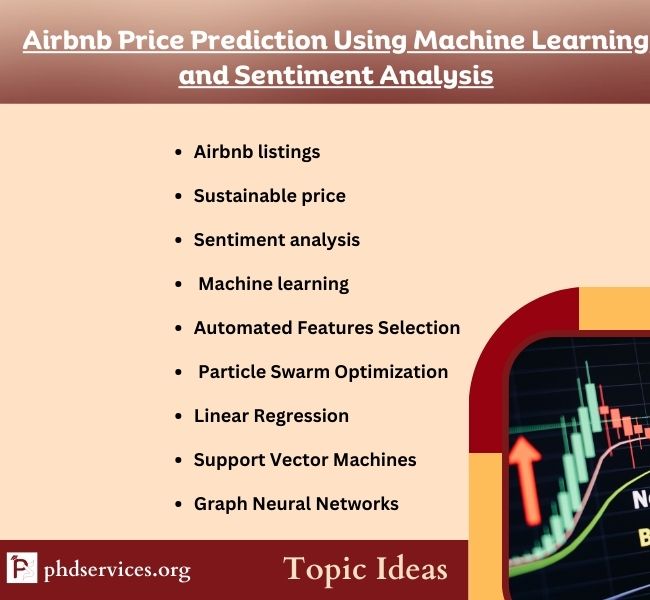
The trend in this space is towards increased automation and machine learning. Future tools will likely be able to predict demand with even greater accuracy, and automatically adjust pricing in response to real-time market conditions. Integration with other property management systems, such as those used for cleaning and maintenance, will become more seamless. We are likely to see more sophisticated algorithms that take into account a wider range of data points.
When choosing a tool, consider your specific needs and budget. Look for features like customizable pricing rules, detailed reporting, and excellent customer support. Don’t focus solely on price; the value of the insights and potential revenue gains should outweigh the cost of the tool. The airbnb revenue calculator features in these tools can be especially helpful.
Testing & Refinement: The Ongoing Process
Dynamic pricing isn’t a "set it and forget it" strategy. It requires ongoing testing and refinement. A/B testing different pricing rules is essential for identifying what works best for your property. For example, you might test two different pricing rules – one that increases prices by 5% when occupancy reaches 80%, and another that increases prices by 10%. Monitor the impact of each rule on occupancy and revenue, and adjust accordingly.
Regularly monitor your key performance indicators – occupancy rate, ADR, RevPAR – to identify any pricing errors or opportunities for improvement. Pay attention to guest feedback; negative reviews mentioning price may indicate that your pricing is too high. Be willing to experiment with different pricing strategies, and don’t be afraid to make changes based on the results you see.
A common mistake hosts make is setting overly aggressive pricing rules, which can lead to low occupancy. Another mistake is failing to adjust pricing based on local events and seasonal trends. It's also crucial to avoid simply copying competitor pricing without considering your own unique selling points. Remember that dynamic pricing is a continuous learning process. The more data you collect and analyze, the better you’ll become at optimizing your pricing and maximizing your revenue.
- Review occupancy and ADR weekly.
- Test different pricing rules for at least two weeks.
- Monitor competitor pricing daily.
- Adjust pricing based on local events and seasonal trends.
No comments yet. Be the first to share your thoughts!