
Pick a trusted revenue calculator
Your Airbnb revenue calculator is only as good as the data it consumes. Generic tools that rely on national averages or static historical figures are like using a map from ten years ago to navigate a city that has completely changed. For high-stakes investment decisions, you need hyper-local, real-time market intelligence. A reliable calculator pulls from actual short-term rental (STR) comp data to project realistic occupancy rates, average daily rates (ADR), and net revenue.
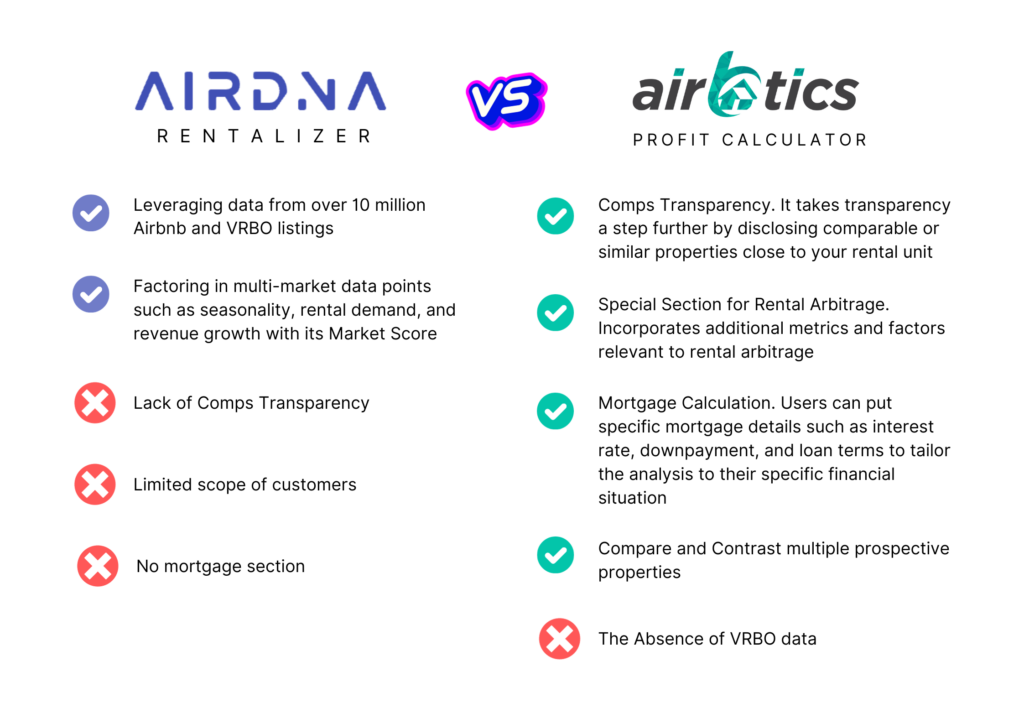
Avoid free, generic online calculators that smooth over local market nuances. Instead, choose a tool that aggregates data from multiple platforms and updates weekly. Tools like AirDNA and Rabbu are industry standards because they analyze specific neighborhood dynamics rather than broad city-wide trends. These platforms allow you to enter a specific address and receive projections based on comparable properties in that exact zip code.
When evaluating a calculator, check its data refresh frequency. If the tool hasn't updated its occupancy and rate data in months, it is likely missing recent shifts in demand caused by new regulations, hotel construction, or seasonal changes. A trusted calculator should also distinguish between gross revenue and net profit by allowing you to input your specific expense structure, such as cleaning fees, management costs, and platform commissions. This precision ensures your ROI calculation reflects the true cash flow potential of the property, not just an optimistic gross figure.
Enter property details and location
An Airbnb revenue calculator is only as accurate as the data you feed it. Treat the input phase like a financial audit: precise specifications ensure the algorithm pulls the right comparable properties, while vague estimates lead to misleading ROI projections.
Follow this sequence to configure your property profile.
Enter the specific city, neighborhood, or zip code. Location is the primary driver of demand and pricing power. Airbnb’s official interactive tool, for instance, computes estimated income by factoring in prior booking data specific to that geography [1]. Even a shift of a few blocks can alter your comparable set significantly.
Select the exact listing type and space configuration. Specify the number of bedrooms, bathrooms, and total square footage. This data helps the calculator identify similar properties in the market. Accuracy here prevents the algorithm from comparing your studio to a multi-bedroom estate, which would skew occupancy and revenue estimates.
Check off all available amenities, such as Wi-Fi, kitchen facilities, parking, or outdoor spaces. These features influence both your nightly rate and your occupancy potential. Listing every relevant amenity ensures the calculator accounts for the premium guests are willing to pay for your specific property setup.
[1] https://news.airbnb.com/interactive-tool-estimates-potential-monthly-host-earnings-on-airbnb/
Adjust occupancy and daily rate assumptions
Default calculator projections often rely on static averages that smooth out the volatility of short-term rental markets. To get a realistic ROI, you must manually override these baselines with season-specific data. Treating your property as a year-round machine with a flat occupancy rate is the fastest way to overestimate cash flow.
Start by isolating your Average Daily Rate (ADR). Instead of using the annual average, input the ADR for your peak season—typically summer or major local holidays—and your low season. If your market has a distinct shoulder season, create a third scenario. This granular approach reveals the true weight of your high-revenue months versus your quiet periods.
Next, adjust the occupancy percentage to reflect reality. An annual average of 70% occupancy might look attractive, but it masks the fact that you could be running at 90% in July and 40% in November. Use historical data from tools like AirDNA or PriceLabs to find the actual booking volume for each quarter. Inputting these fluctuating numbers forces the calculator to account for revenue gaps, giving you a stress-tested projection that is far more reliable than a generic estimate.
Subtract operating costs from gross revenue
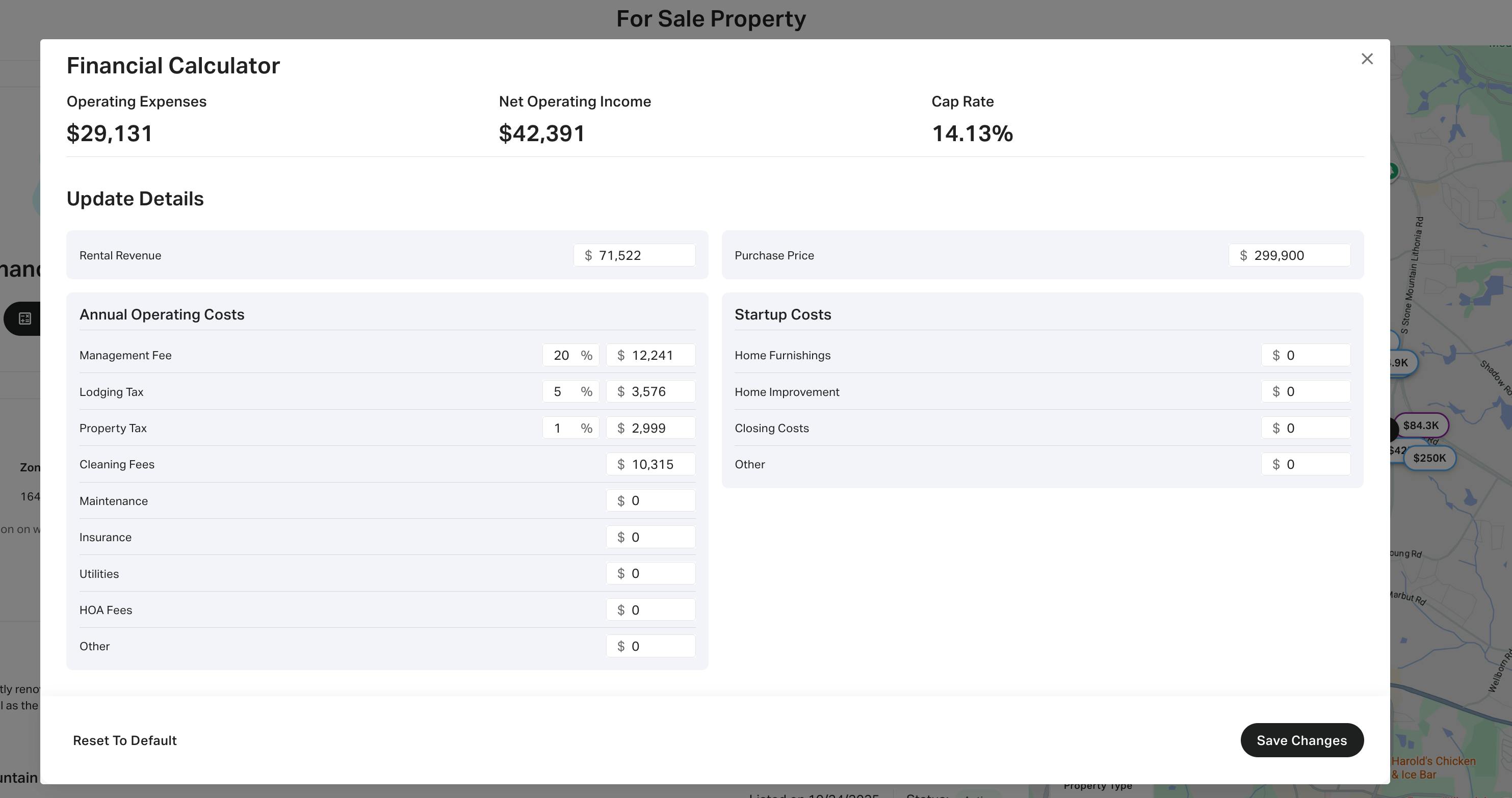
Gross revenue is not profit. It is simply the total amount a property earns before any expenses are deducted. Mistaking gross income for cash flow is the most common error in short-term rental investing. To find the true return on investment, you must subtract every recurring cost from the gross figure.
An Airbnb revenue calculator handles this subtraction automatically, but you must ensure the inputs are accurate. If you omit a cost category, your projected profit will be artificially high. This leads to overbidding on properties or underestimating the operational burden. Treat the gross revenue number as a starting point, not a finish line.
The primary deductions fall into four categories: platform commissions, cleaning fees, utilities, and maintenance. Each of these erodes the margin differently. Some are fixed percentages, while others vary with occupancy.
Platform commissions
Airbnb and Vrbo charge service fees that typically range from 14% to 20% of the booking total. This fee covers the platform’s technology, customer support, and payment processing. It is a non-negotiable cost of doing business. If your calculator does not auto-apply this percentage based on your host settings, enter it manually.
Cleaning fees
Cleaning fees are charged to guests to cover the turnover process. While guests pay this directly, it is an operating cost that reduces your net income. Professional cleaning services often cost between $50 and $150 per stay. If you clean the unit yourself, still assign a market-rate value to your labor. This ensures your profit margin reflects the true effort required.
Utilities
Utilities are often the most volatile expense in short-term rentals. Unlike long-term leases, guests control the thermostat, lighting, and water usage. Electricity, water, gas, and high-speed internet can add $100 to $300 per month depending on the season and property size. Use local utility averages or past bills to estimate this line item accurately.
Maintenance and repairs
Short-term rentals experience higher wear and tear than traditional homes. Broken appliances, worn linens, and plumbing issues require immediate attention. Set aside 5% to 10% of gross revenue for a maintenance reserve. This fund covers everything from lightbulbs to HVAC replacements. Without this buffer, unexpected repairs will eat directly into your cash flow.
-
Platform service fees (14-20%)
-
Professional cleaning costs
-
Utilities (electric, water, gas, internet)
-
Maintenance and repair reserve (5-10%)
-
Insurance and property management fees
-
Supplies (toiletries, coffee, linens)
Subtracting these costs reveals the net operating income. This number determines whether the property can cover its mortgage and still generate profit. A property that looks profitable on gross revenue may actually be losing money once these operational realities are accounted for. Always run the full calculation before making an offer.
Validate results with local market data
Use an Airbnb Revenue Calculator for Accurate ROI works best when the purchase path is explicit. Verify the source, compare the offer against real alternatives, check the total cost, and confirm what happens after payment before you decide. After each comparison, write down the one risk that would change your mind. If the seller, condition, support, warranty, shipping, or upkeep still feels uncertain, resolve that question before moving to checkout.
The simplest way to use this section is to verify the seller, compare the total cost, and resolve the biggest risk before you commit.
Frequently asked questions about STR revenue
When calculating return on investment for short-term rentals, precise data beats general rules of thumb. Use the following guidelines to validate your revenue projections and avoid costly estimation errors.
No comments yet. Be the first to share your thoughts!